
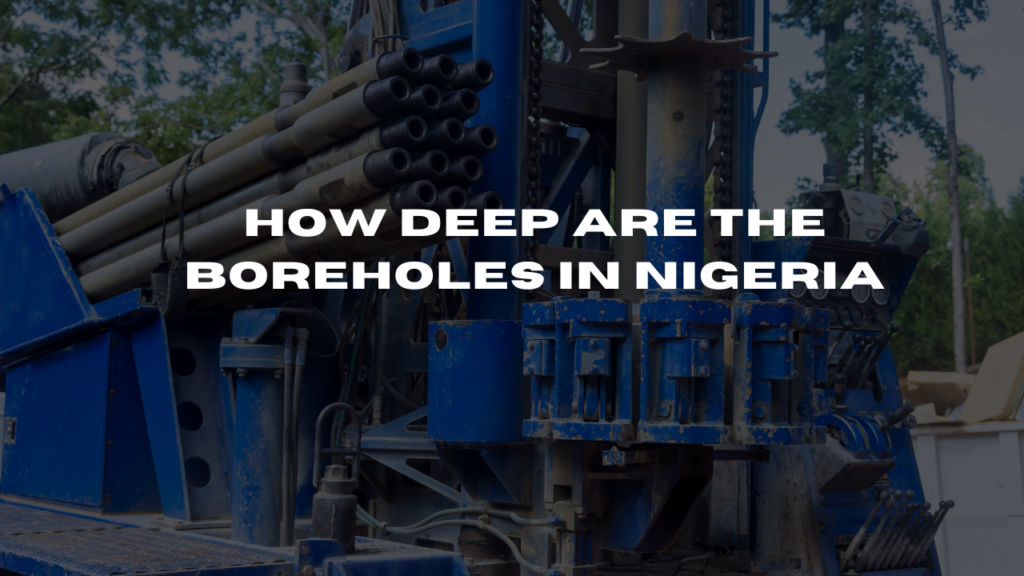
If you’re thinking about drilling a borehole, one of the first questions that might pop into your head is, “How deep does a borehole need to be in Nigeria?”
The answer varies depending on several factors, but on average, boreholes across Nigeria typically range from 70 to 350 meters deep. This variation is due to differences in water table levels, soil composition, and climate across the country’s diverse regions.
Don’t worry, we’ll break it down further to help you understand what affects borehole depth and what you can expect when drilling.
What Determines the Depth of a Borehole?
Before diving into specific numbers, it’s important to understand that boreholes tap into underground water sources called aquifers. These aquifers are found at different depths, depending on several factors:
- Geo-political zone: Nigeria’s diverse landscape means water sources vary between regions. The depth of a borehole in the Northern zones, for instance, may be very different from one in the South.
- Soil composition: Rocky terrains require deeper drilling to reach water compared to areas with sandy or loamy soil.
- Water table: The water table, which is the underground level where the soil is saturated with water, fluctuates depending on the season and the local climate. In areas where the water table is naturally low, you’ll need to drill deeper.
Now that we’ve covered the basics, let’s examine the depth of boreholes in Nigeria’s different regions.
Average Borehole Depths in Nigeria
- Northern Nigeria
In the Northern zones of Nigeria, where the climate is more arid, boreholes generally need to be deeper to access water. In these areas, boreholes can range anywhere from 100 to over 350 meters deep. The lack of surface water and the nature of the ground (which is often rocky) mean that drilling companies like Borehole Drillers Nigeria usually have to go further down to reach reliable water sources. - Southern Nigeria
In contrast, the Southern zones of Nigeria, with their tropical climate and higher rainfall, tend to have higher water tables. As a result, boreholes here are typically shallower, ranging from 70 to 200 meters deep. However, while the depth might be less, there’s still a need for proper water testing and treatment to ensure the water is safe for drinking. - Central Nigeria
In the central regions, the depth of boreholes can vary greatly depending on whether you’re in a more rural, rocky area or closer to the fertile, agricultural zones. Boreholes here generally fall within the 100 to 250 meters range, but it really depends on the local geology and water table.
Why Does Borehole Depth Matter?
You might be wondering why the depth of a borehole is so important. Well, it’s all about reliability. The deeper your borehole, the more likely you are to access a stable, long-term water source. Shallow boreholes can dry up more easily, especially during Nigeria’s dry season when the water table can drop. A deeper borehole gives you better access to the more reliable, deeper aquifers that aren’t as affected by seasonal changes.
Borehole Depth and Costs
One thing that’s important to keep in mind is that borehole depth directly affects the cost of drilling. Deeper boreholes require more advanced equipment, more labor, and more materials (like pipes and casings), all of which can increase the overall price. While it might be tempting to opt for a shallow borehole to save on costs, this can sometimes backfire if the borehole dries up or doesn’t provide enough water.
At Borehole Drillers Nigeria, we always recommend balancing cost with reliability. A deeper borehole may cost more upfront, but it can save you money in the long run by ensuring a steady supply of water year-round.
Getting the Right Depth for Your Borehole
When it comes to drilling a borehole, there’s no need to guess how deep you’ll need to go. We recommend starting with a geological survey of your area. This will give you a clearer idea of the water table in your specific location, helping you determine the ideal depth for your borehole.
We also take the time to consult with each client to understand their water needs, whether it’s for household use, irrigation, or industrial purposes. Knowing how much water you’ll need can help determine the best depth and ensure your borehole delivers the right amount of water for your daily needs.
Conclusion
In summary, borehole depth in Nigeria can range anywhere from 30 meters in wetter Southern areas to over 200 meters in drier Northern regions. The depth you’ll need depends on factors like your location, the local geology, and your water usage needs. While deeper boreholes tend to cost more upfront, they also offer a more reliable and sustainable water supply, especially during dry seasons.
If you’re still unsure about how deep your borehole should be, don’t worry—that’s what we’re here for! Contact Borehole Drillers Nigeria today for expert advice and professional drilling services. We’ll help you determine the perfect depth for your borehole, ensuring that you have a steady, reliable source of clean water for years to come.